
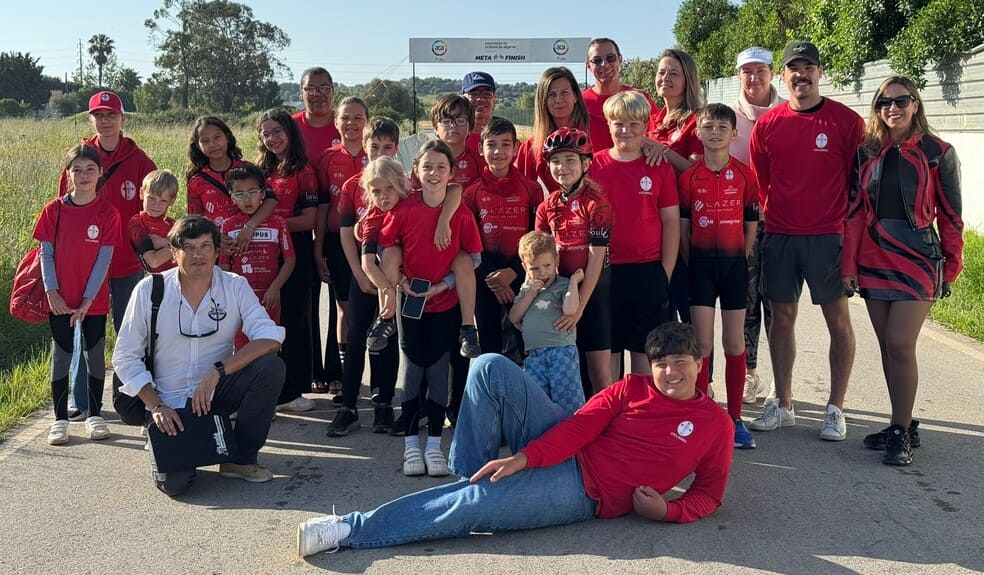
How are training sessions structured?
When we think about cycling training for children and young people, it is easy to picture a group simply riding together. But a well-structured training session involves much more than just covering kilometres.
Each session should have clear goals, exercises suited to the age and experience of the participants, and enough space for every young rider to learn, try, correct mistakes and improve gradually.
Technique, confidence, safety, decision-making and the enjoyment of cycling are all part of the same process. It is this combination that helps turn every training session into a real learning opportunity.
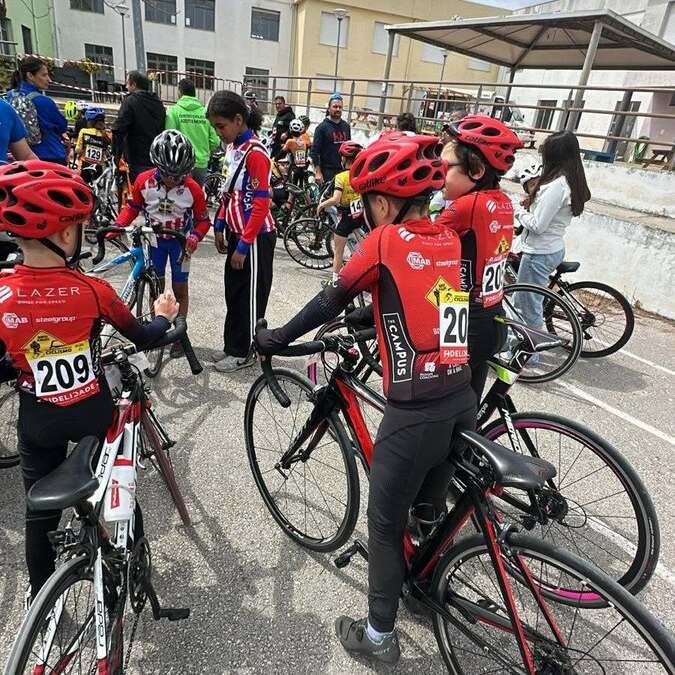
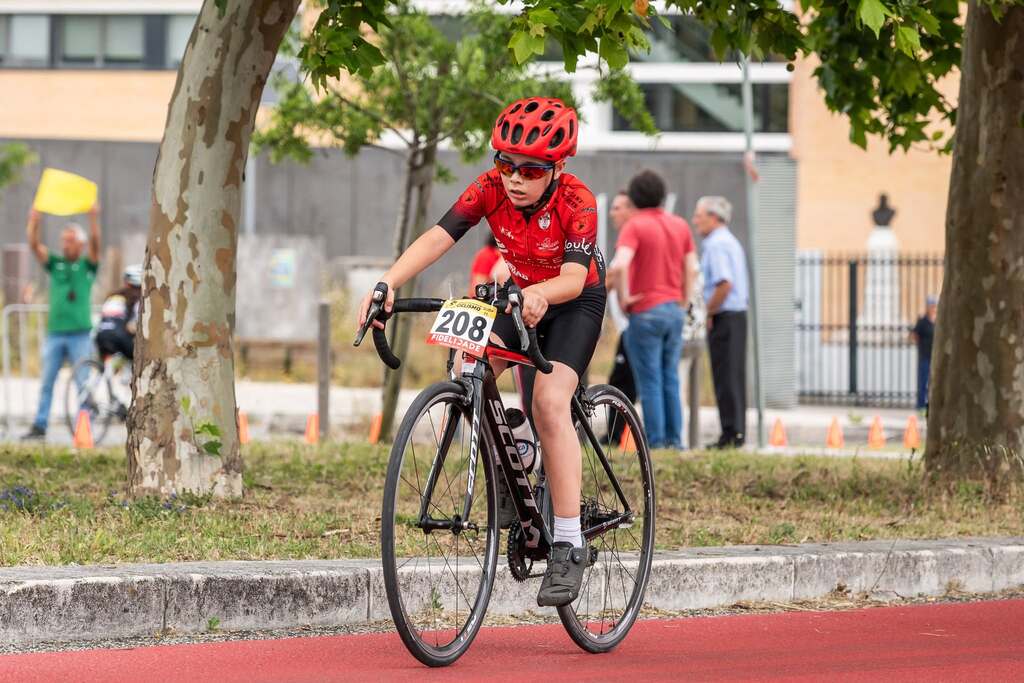
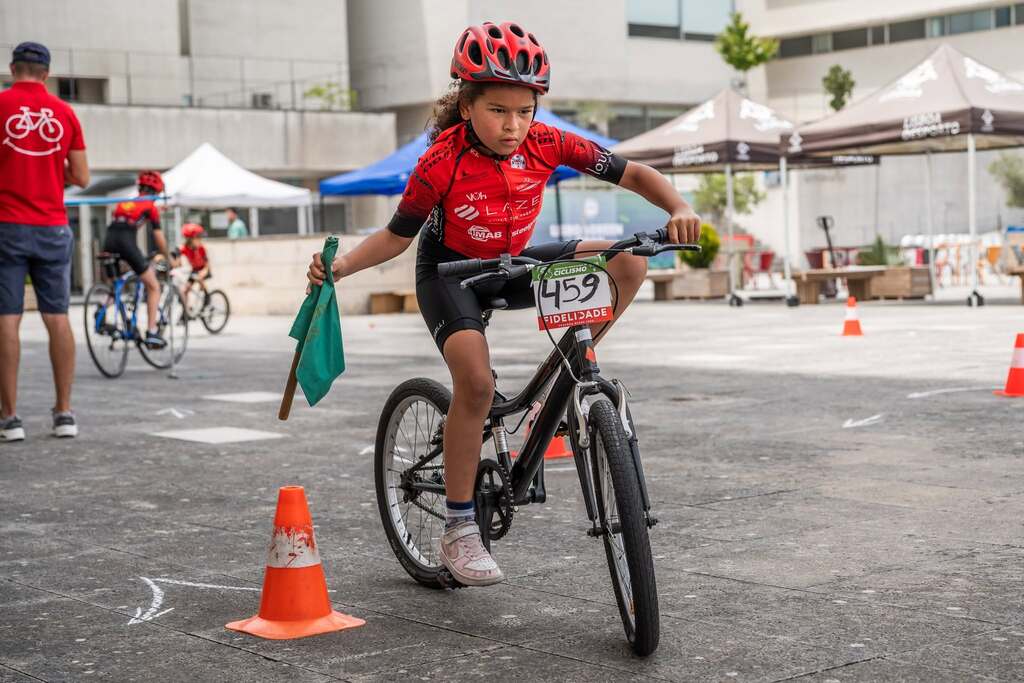
THE FUTURE IS ALSO BUILT ON TWO WHEELS

Training starts long before riding faster
When children and young people are first introduced to cycling, speed should not be the priority.
Before thinking about riding faster, it is essential to build a good relationship with the bike: balance, body position, control, braking and the ability to change direction safely.
These skills may seem simple, but they are the foundation for everything that comes later. A young rider who controls the bike well can react more effectively in different situations, build confidence more quickly and be better prepared for increasingly demanding exercises.
The basic skills developed in training include:
- balance;
- body position on the bike;
- handlebar control;
- braking;
- changes of direction;
- coordination.
Technique: learn to control before you accelerate
Technique is one of the most important parts of developing a young cyclist. It is not enough simply to know how to pedal. Young riders need to learn how to control the bike in different situations.
Cornering, changing direction quickly, braking or riding through a narrow space all require coordination, attention and technical control.
That is why many training exercises may look simple at first, but each one has a very specific purpose.
Cones, short circuits, direction changes, braking zones and balance exercises help young riders understand how the bike moves and develop greater precision and control.
Good technique helps develop:
- control;
- stability;
- coordination;
- smoothness;
- safety;
- reaction skills.
“Confidence grows when what once seemed difficult starts to feel natural.”
Building confidence through practice
Confidence cannot be taught through explanation alone.
It is built mainly through experience.
A young rider may understand in theory how to take a corner, but it is through repeated practice that they really begin to feel the bike and understand how to adjust their body position, speed and line.
Repetition is important, but it should never be mechanical.
The goal is to create situations where young riders can experiment, understand what did not work, make adjustments and try again.
That is how confidence grows: when something that once felt difficult gradually starts to feel natural.
Confidence develops when young riders are able to:
- experiment;
- make mistakes;
- receive guidance;
- try again;
- recognise their own progress.
Every exercise should have a purpose
In a structured training session, exercises are not there simply to fill time.
Each one should focus on a specific skill. A circuit can be used to improve changes of direction.
A braking exercise can help young riders better understand the distance needed to stop. An obstacle sequence can develop balance, coordination and decision-making.
When exercises have a clear purpose, young riders also begin to better understand what they are learning.
As their skills become more established, different challenges can then be combined, making training increasingly similar to the situations they may encounter in a race or on a real course.
Training is also about learning to make decisions
Cycling constantly requires decision-making.
When should you brake? Which line should you take? How should you approach a corner? When should you accelerate? How should you react to another rider?
That is why an important part of training is putting young riders in situations where they need to observe, decide and act.
Not every exercise should have only one correct solution.
Sometimes, the most important thing is to create a situation where the rider learns to assess what is happening in front of them and adapt their response.
This ability becomes increasingly important as young riders gain more experience.
Making decisions on the bike involves:
- observing;
- anticipating;
- choosing;
- reacting;
- adapting.
Progress should be gradual
Not every young rider arrives at training with the same level of experience.
Some already have a good command of the basic skills. Others are still building confidence with simpler tasks.
That is why challenges should become more demanding gradually.
An exercise that suits a more experienced rider may be too difficult for someone who is just starting out. In the same way, an exercise that is too simple may no longer provide enough of a challenge for someone who has already mastered that skill.
Close guidance makes it possible to adapt exercises and create different levels of difficulty within the same training session.
On our training page, we explain this approach in more detail: every rider has their own starting point and should be able to improve consistently, at a pace that respects their experience and confidence on the bike.
A well-planned progression helps to:
- consolidate skills;
- avoid making the jump too difficult;
- maintain motivation;
increase the level of - difficulty gradually;
respect each young rider’s pace.
Safety is part of the learning process
Safety and technique are closely connected.
The better a rider can control the bike, the better prepared they are to react to different situations.
But safety is also about behaviour, awareness and responsibility.
Young riders need to learn to keep a safe distance from others, follow instructions, respect training areas and understand that their decisions can affect the riders around them.
That is why safety should be part of every exercise, rather than something covered only in a separate explanation.
Training safely also means learning to:
- follow instructions;
- stay aware of the surroundings;
- control speed;
- anticipate movements;
- respect other riders.
The importance of guidance
One of the biggest advantages of training at a cycling school is having the support and guidance of a coach.
A coach can spot details that may not be obvious to the young rider: an incorrect position, braking too sharply, an inefficient line or difficulty maintaining balance.
Making the right correction at the right moment can prevent a mistake from becoming a habit.
But guidance does not mean correcting every movement all the time.
It is also important to give young riders the space to experiment, find solutions and learn through practice.
It is this balance between guidance and independence that helps develop more confident and more aware cyclists.
Learning in a group makes a difference too
Cycling training has an individual side, but the group is also an essential part of the learning process.
Training with other young riders gives each cyclist the chance to observe different ways of performing an exercise, learn from teammates and develop a greater awareness of the shared space around them.
It is also within the group that teamwork, encouragement and mutual support naturally develop.
Young riders learn that they can improve individually while still supporting those around them.
Training in a group helps develop:
- cooperation;
- respect;
- communication;
- team spirit;
- the ability to learn from others.
Not every training session needs to be the same
Variety is important too.
Repeating the same exercises every time can make training predictable and reduce motivation.
The same skills can be developed through different challenges by changing the circuits, distances, combinations of exercises or objectives.
This variety helps keep young riders engaged while also improving their ability to adapt to different situations.
A bike responds differently depending on the space, speed, course and conditions. The wider the range of experiences, the more complete the learning process becomes.
Training also prepares riders for competition
As young riders develop, some exercises can gradually begin to reflect the demands they may face in competition.
Starts, changes of pace, cornering, riding in a group, sprints and short individual efforts can all be introduced step by step.
But preparing for competition does not mean turning every training session into a race.
Before learning to compete well, young riders need to control the bike confidently, make good decisions and understand how to ride safely within a group.
Competition should be seen as an extension of the learning process, not a replacement for it.
How can you tell if a young rider is really improving?
Progress should not be measured by speed alone.
There are many other important signs that show a young rider is developing.
They may be improving when they take a corner with greater confidence, brake with more control, need less help during an exercise, or begin to make better decisions on their own.
Progress can also be seen in the way they interact with the group, respond to feedback or deal with a challenge.
Progress can be seen through:
- better bike control;
- improved technical execution;
- greater independence;
- more confidence;
- better decision-making;
- a greater ability to take on new challenges.
The most important thing is to keep wanting to ride
A training session can be technically very well designed, but one thing is essential: young riders should continue to enjoy being on the bike.
Motivation is part of the learning process.
When a young rider looks forward to the next training session, there is also a greater desire to keep practising, experimenting and improving.
That is why technique, challenges and discipline should exist alongside moments of discovery, friendship and fun.
In youth cycling, developing good cyclists is important. Helping young people build a positive and lasting relationship with the bike is even more important.
Want to discover our training sessions?